
Conservation Intern
Summer 2025 · Osa Peninsula, Costa Rica
Half past five in the morning on the Osa Peninsula, and I was ankle-deep in wet ground, pulling white ginger lily out by the roots. The flower is beautiful — that's the problem. It was brought in as an ornamental, and it strangles everything native around it. In a strip of rainforest holding roughly 2.5% of the planet's biodiversity, beauty that doesn't belong is a slow-motion emergency.
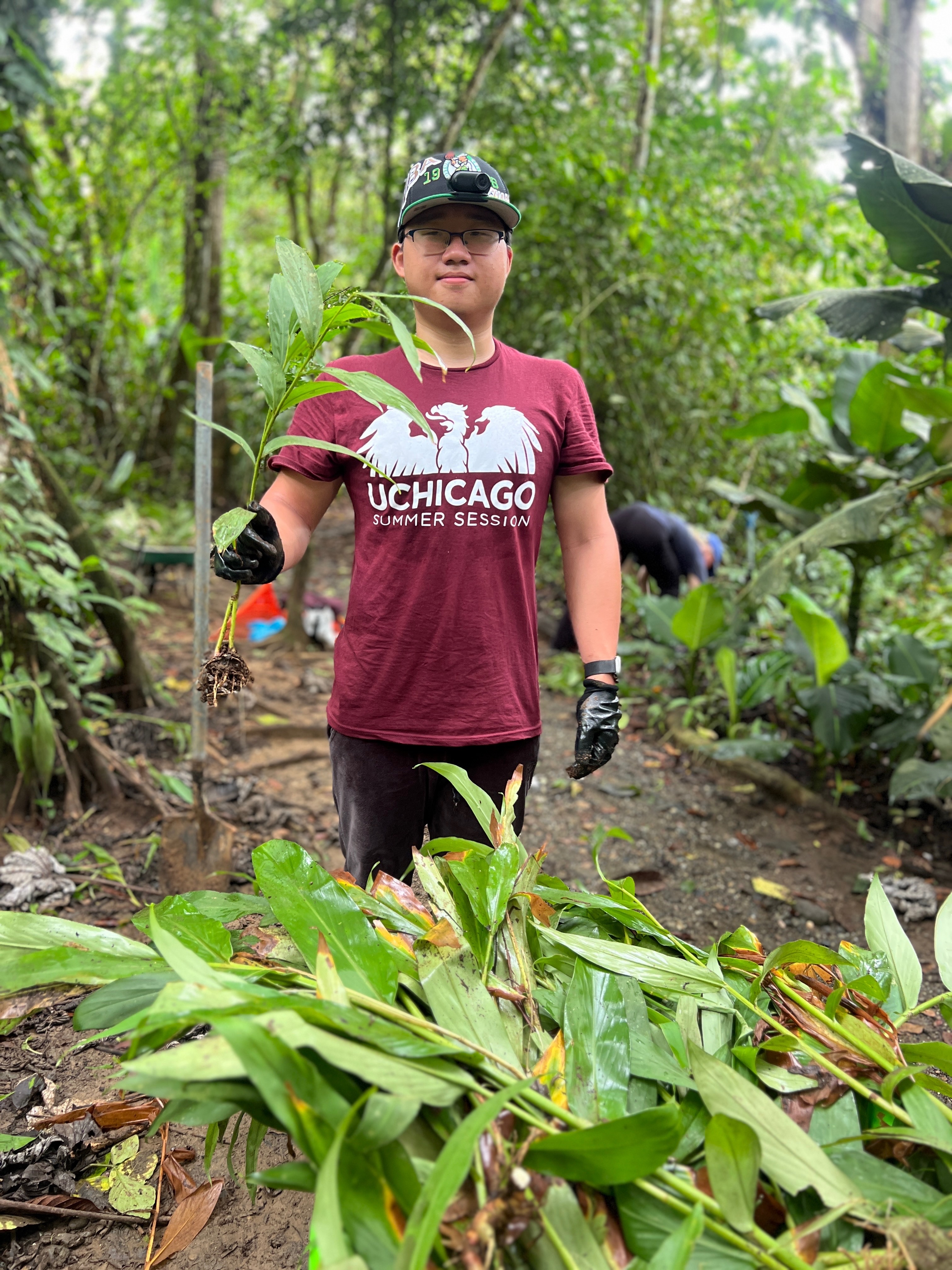
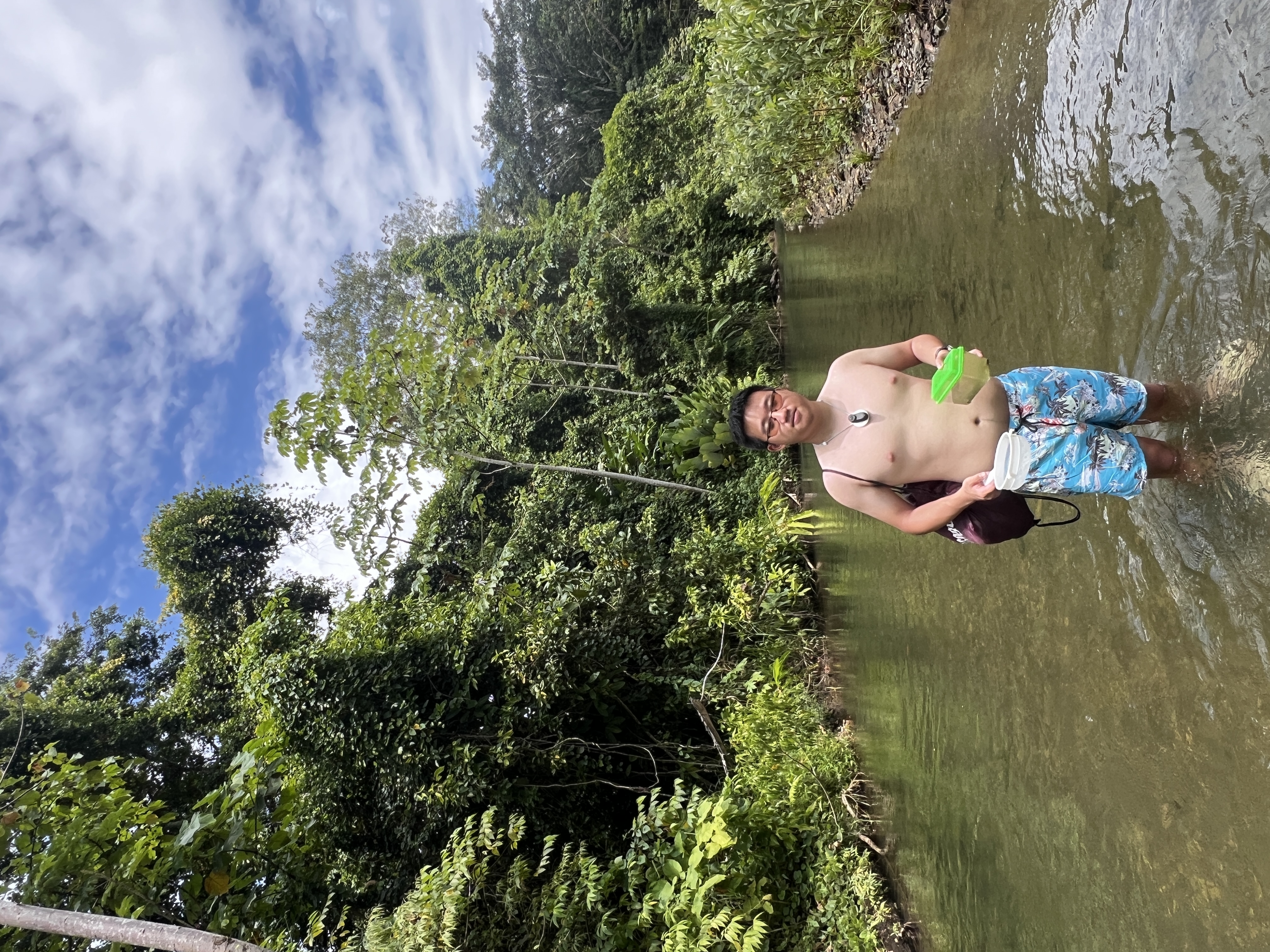
I spent three weeks there with the BioSur Foundation, under Jim Córdoba-Alfaro, its founder and president. The work was field ecology rather than a classroom: biodiversity surveys, habitat monitoring, camera traps set along the corridors where illegal logging squeezes wildlife into narrower and narrower paths, insect collection, planting native trees — and the lilies, every dawn.
I'll be honest about where I started. People devoting their lives to fragile, insignificant-looking animals had always seemed like a myth to me. Then someone walks you through the keystone logic — what actually happens when the bees go, then the ants, then the coral — and you realize these creatures aren't beneath us on some pyramid; we're standing on them. Losing them is sawing at the branch we're all sitting on.
The researchers taught me that just by being themselves. Watching a professional ecologist get genuinely giddy about finding a small bug stops being funny by day three and starts being contagious. Jim has been doing this work for over a decade, chronically underfunded, alongside field biologists who knew more than anyone I'd ever met and earned less than my school's janitors. When a fer-de-lance turned up, Jim's instinct was to kneel closer and look. Not a man who reads about snakes — a man who checks.
One evening a speaker from a reef-restoration NGO came through camp: a twenty-year-old university student, deep in debt, doing physically brutal work for no pay, restoring coral reefs — another keystone species. Zero regrets, he said. If you know you like it and want to do it, you don't need everything planned out. I wrote that one down.
And the people my own age were the best part. My roommate beat me at chess, repeatedly — which, after years of being the chess guy, was honestly a relief. There were peers from all over the States and a couple of European exchange students whose jokes had no business being that unhinged. Between the surveys and the root-pulling, the long unstructured conversations were where I figured out something about myself: what I enjoy most, more than winning or building anything, is talking with people who actually listen.
The internship closed with a final presentation, which passed with distinction, and earned 2 university credits through Portland State University (INTL 404, grade A). The credits sit on a transcript somewhere. The lily grows back — that's the nature of the job. You pull it anyway.